 ®
Application & selection
High chromium cast grinding balls from Grinding Master® are supplied for ball mill applications after the mill duty, material grade and ball diameter have been reviewed. The catalogue high-chromium family lists chromium content of 10–30%; confirm the ordered composition by grade. Catalogue hardness and performance figures refer to selected products and test conditions. Confirm the ball diameter, hardness measurement positions and acceptance criteria for the order; do not combine figures from different catalogue product families.
For another manufacturing route, compare forged grinding balls. Use the ball-size selection guide and quality-inspection checklist to prepare your specification. Cylpebs are a different media shape; review the balls-versus-cylpebs comparison before changing the charge.
Key specifications
The catalogue high-chromium column lists surface hardness of 58–69 HRC. Confirm the selected grade, ball diameter, test method and measurement positions; a catalogue maximum or average is not a batch acceptance guarantee.
The catalogue discusses surface-to-core hardness variation for selected products. If this forms part of acceptance, specify the sampling, measurement positions and permitted difference.
Catalogue reference: breakage ≤0.5% for the listed high-chromium series. Agree applicability, the definition of breakage and assessment conditions for the order.
Catalogue clinker-grinding reference: ≤25 g per tonne of clinker for the listed series. Define the measurement boundary and operating conditions before comparing wear figures.
Impact acceptance: confirm the test method, specimen geometry, sampling and value for the selected grade. The catalogue’s separate SAG-ball impact value must not be applied to every high-chromium cast ball.
Microstructure: martensite plus carbide
Standard ball sizes
120 mm
7,057 g each; 142 pieces per tonne
110 mm
5,436 g each; 184 pieces per tonne
100 mm
4,048 g each; 245 pieces per tonne
90 mm
2,977 g each; 336 pieces per tonne
80 mm
2,091 g each; 478 pieces per tonne
70 mm
1,401 g each; 714 pieces per tonne
60 mm
882 g each; 1,134 pieces per tonne
50 mm
510 g each; 1,959 pieces per tonne
40 mm
261 g each; 3,826 pieces per tonne
30 mm
110 g each; 9,069 pieces per tonne
25 mm
64 g each; 15,671 pieces per tonne
20 mm
32.7 g each; 30,607 pieces per tonne
Non-standard sizes and shapes can be produced to your requirements.
Material composition
Chromium 10% to 30%; carbon 2.0% to 3.5%; silicon 0.3% to 1.2%; manganese 0.1% to 2.6%; molybdenum up to 2.0%; copper up to 1.0%; phosphorus 0.10% maximum; sulphur 0.08% maximum.
The exact grade is confirmed against your application and ordered chemical composition before production.
Applications
Cement and clinker grinding; metal mining, including gold, copper, iron, bauxite, zinc and lead; and thermal-power grinding, including pulverised coal for suspension-fired boilers and limestone slurry for flue-gas desulphurisation. For ceramics, pigments or other contamination-sensitive processes, discuss contamination limits and material compatibility before selecting steel media.
Manufacturing
Cast from a controlled melt with chemical analysis before and after casting. Oil-quenched and tempered for the specified mill application, with controlled surface roughness. Each batch is checked by direct-reading spectrometer, surface and core hardness testing, impact testing, metallography and visual inspection. Specify the required batch identification, inspection reports and delivery documents in the order, and confirm which documents will be supplied.
Packing and delivery
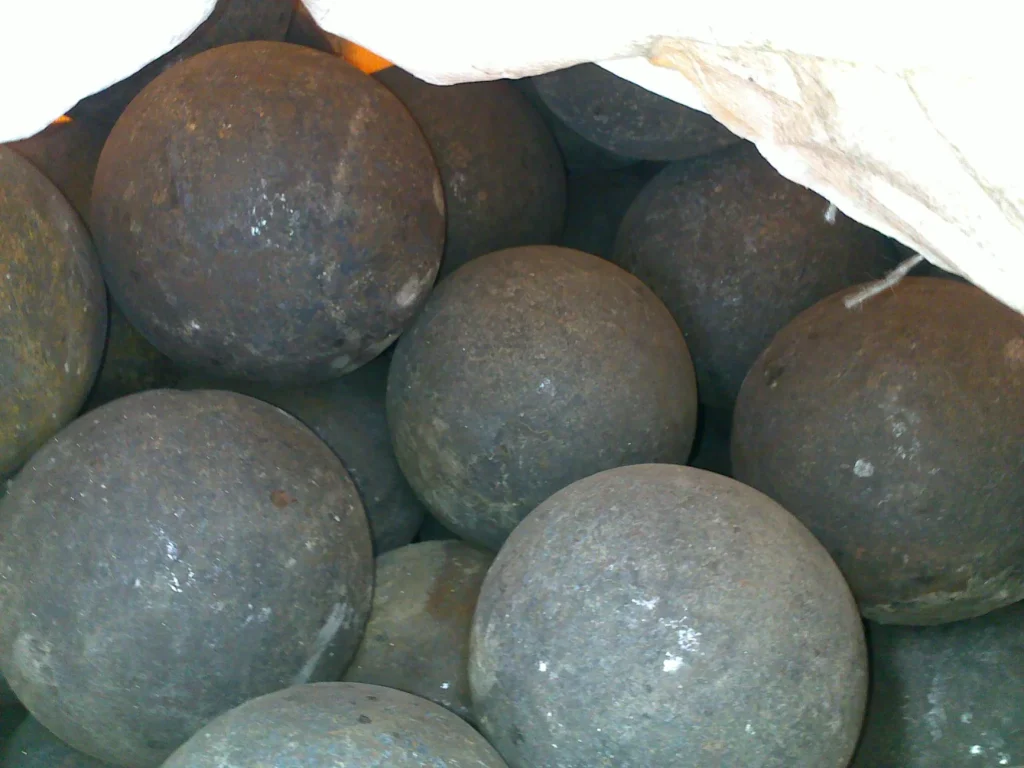
Export packing uses 850 kg iron drums or 1,000 kg high-strength, sun-resistant bulk bags. Balls are packed by size and protected against moisture and contamination during transport. A 20-foot container can carry up to 25 tonnes.


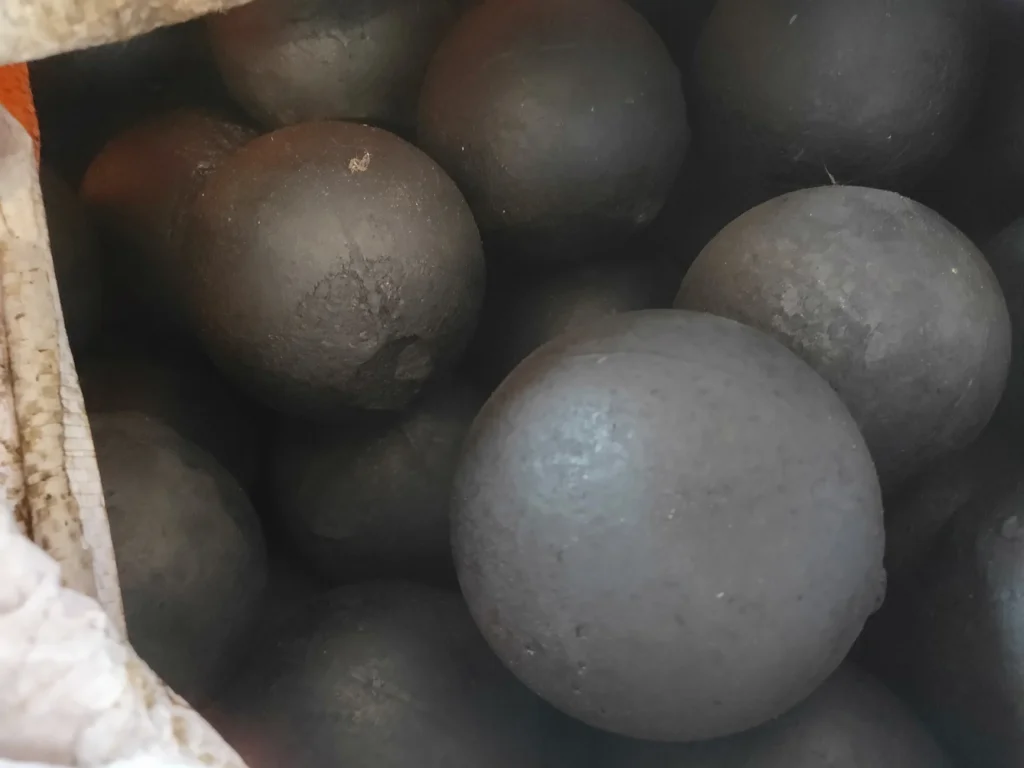
As-cast grinding balls